 Image 1 of 1
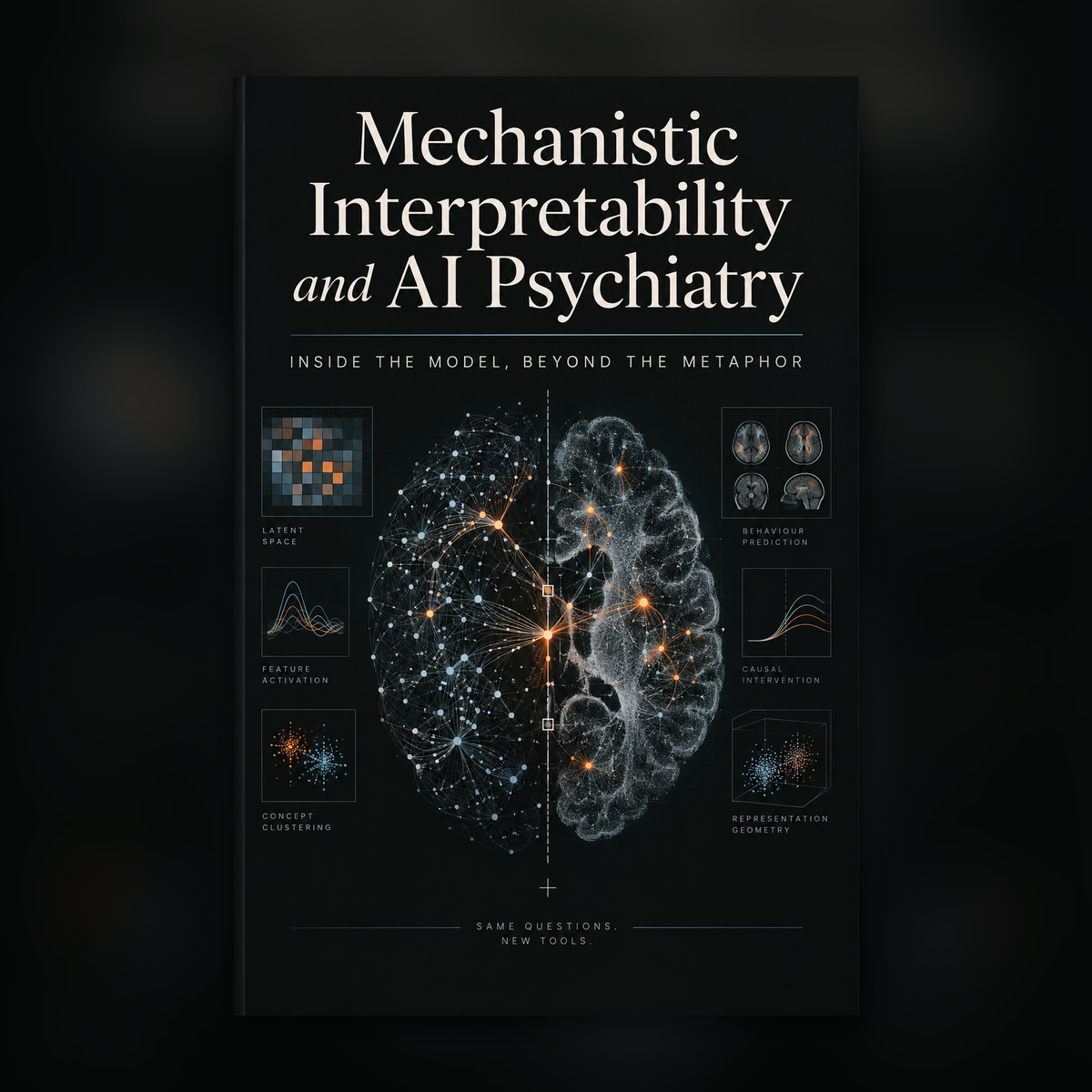
Researchers who open up AI models find features and circuits they can turn up or down. Everyone else talks about chatbots as if they had minds, calling them delusional, sycophantic or prone to making things up. This book asks how far that psychiatric language actually helps, and where it leads us astray.
It explains how a transformer works, what the new 'neuroanatomy' of features looks like, and what personality without a person might mean. It also asks why diagnosis has always been political, and ends on something neither field quite has a word for: a thing stranger than a tool but less than a person.
What you get: a ZIP file containing the book as a PDF (150 pages) and an EPUB, so you can read it on a computer, tablet or e-reader.
Researchers who open up AI models find features and circuits they can turn up or down. Everyone else talks about chatbots as if they had minds, calling them delusional, sycophantic or prone to making things up. This book asks how far that psychiatric language actually helps, and where it leads us astray.
It explains how a transformer works, what the new 'neuroanatomy' of features looks like, and what personality without a person might mean. It also asks why diagnosis has always been political, and ends on something neither field quite has a word for: a thing stranger than a tool but less than a person.
What you get: a ZIP file containing the book as a PDF (150 pages) and an EPUB, so you can read it on a computer, tablet or e-reader.